
Psycho-oncology Services
Our psycho-oncology services focus on your emotional and behavioral health, as well as overall symptom management. At the Braman Comprehensive Cancer Center, we understand the difficult challenges a cancer diagnosis can bring to you and your loved ones. As a result, you may choose our particular health services at some point in your cancer journey. Psycho-oncology services are made up of three specialties:
- Psychology
- Psychiatry
- Pain and symptom management
We can work with you throughout your cancer diagnosis, treatment, and thereafter as needed.
Psycho-Oncology – Emotional Wellness Throughout Your Cancer Care
Psycho-oncology is a subspecialty concerned with the emotional responses of cancer patients and their loved ones at all stages of disease. We focus on improving a patient’s emotional, behavioral, and psychosocial difficulties associated with cancer. Psycho-oncology professionals are required to be highly specialized in their training, especially in helping detect serious conditions or situations associated with cancer. As a team, we can work closely with you to make the best decisions as you continue to take an active role in your mental balance and emotional wellness.
Psychologist
Our fellowship-trained licensed clinical psychologist will use evidence-based treatments to help you manage anxiety, depression, or other problems encountered. This service might include cognitive behavioral therapy, mindfulness-based stress reduction, or acceptance and commitment therapy, along with other group-focused treatments.
Psychiatrist
Other recommendations for emotional wellness might include medications targeting prevalent symptoms in cancer patients. These might include medications for sleeplessness, delirium, and other forms of emotional concerns, which would be the focus of your work with our psychiatrist here at the cancer center. This specialized service may be particularly relevant in that the medications utilized will not affect your cancer treatments.
We also offer in-office appointments as well as “bedside” services when you are a patient in the treatment rooms. We will also try to offer our sessions on the same day as your other medical appointments at Mount Sinai. In addition, our services are available through virtual telemedicine visits. Our services are offered in English or Spanish.
There may be several reasons why you may be referred to psycho-oncology. One reason may be that your team has noticed you are having difficulty in coping with your initial diagnosis, treatment, effects after your cancer experience, or even other past circumstances that come to the surface during this time. For instance, some patients might experience anxiety or depression, for which they may need important coping skills to help improve their quality of life. Other patients might have a history of different mental health concerns, which can become more complicated with a cancer diagnosis. For example, you might have experienced depression in the past or a significant loss in your life, which might require some specialized trauma-focused attention. Another important reason a team member may refer you to psycho-oncology may be because you scored high on The Distress Thermometer. A psychologist or psychiatrist is here for you to help alleviate the distress you may be experiencing during your cancer care.
The Distress Thermometer is a screener that helps us gather information on your levels of distress and reasons why you may feel distressed. This routine screener can inform us about your distress before it becomes more difficult to treat. The medical assistants at the cancer center will give you this screener when you come for visits.
The psychologist or psychiatrist can be accessed at your request. However, this team is usually referred by your medical doctors. Other team members may also introduce you to our service based on how well you are dealing with your cancer, or if your score is high on the distress screener. Our specialized patient representatives can assist you in providing information about your particular insurance coverage or co-pays.
Psychologists and psychiatrists are doctors who receive different types of training for the diagnosis and care of mental health concerns in patients. Although both can provide psychotherapy, psychologists focus primarily on “talk” therapy and psychological testing, whereas psychiatrists may rely more on prescribing medication.
Psychology is the study of the mind, emotions, thoughts, and behaviors. In order to be called a psychologist in the U.S., a person needs to earn a bachelor’s degree, a master’s degree, a doctoral degree in psychology, and in some states (such as Florida) complete a postdoctoral residency to take a licensing exam in that state. Fellowship training refers to specialty training after residency. The educational process to become a licensed psychologist takes about 10-12 years after high school. These professionals may have a PhD (Doctor of Philosophy with a psychology major) or a PsyD (Doctor of Psychology). The psychologist here at the cancer center is fellowship-trained in psycho-oncology.
Psychiatry is a branch of medicine, with a specialization in psychiatry. These professionals can have an MD (Doctor of Medicine) or a DO (Doctor of Osteopathic Medicine). To become a psychiatrist, the person needs to earn a bachelor’s degree, a medical school degree, and complete a postdoctoral residency. The educational process to become a psychiatrist takes about 10-12 years after high school, before taking a state licensing exam. Fellowship training refers to specialty training after residency. The psychiatrist here at the cancer center is fellowship-trained in psycho-oncology.
Pain and Symptom Management
Pain and symptom management are vital parts of cancer care and are provided through palliative and supportive care services. Palliative care specialists (PCS) go through extensive training, including four years of medical school, three to five years of residency, and a year of specialty fellowship training to provide comprehensive supportive care. They specialize in treating patients with serious illnesses and provide care alongside curative treatment.
The focus of PCS is to support, communicate, and coordinate patient care throughout the course of disease. PCS provide care in both the hospital and clinical settings with a goal of improving quality of life by communicating patients’ wishes for care, advanced care planning, complex pain and symptom management, and emotional/spiritual support for patients and families. Early involvement of palliative care has been shown to decrease hospitalizations and the overall cost of care. If you believe that palliative care services will benefit you or your family member, please speak to your oncologist for a referral.
Symptom management includes but is not limited to the following:
- Pain
- Fatigue
- Drowsiness
- Shortness of breath
- Sleep disturbances
- Delirium or confusion
- Appetite changes
- Depression and/or anxiety
- Nausea and vomiting
- Constipation
Support Groups
A cancer journey can have several challenging chapters, and sharing the experience with others who understand what you are going through can be very helpful. In fact, sharing stories and experiences with fellow cancer patients creates a sense of kinship, builds new relationships, and offers patients and their caregivers an outlet for their feelings in a safe, confidential environment.
At the Braman Comprehensive Cancer Center, our Psycho-oncology and Cancer Support Services teams both offer support groups specifically tailored to the unique circumstances of those who participate. Our programs might include gatherings, some of which are complimentary to our patients, while others are fee-for-service. Some group interventions may also be available virtually.
The cancer center frequently runs several monthly or quarterly complimentary groups at different points in time. Fee-for-service or insurance-verified groups are also held periodically. For more information on when these groups run, please refer to the Events Calendar and the information below.
The following are a few of the groups held periodically at the cancer center:
Quarterly Complementary Groups:
- “I CAN” SURVIVORSHIP LECTURE SERIES,
- a psychoeducational set of lectures/seminars aimed at raising awareness about survivors and addressing cancer patient survivorship care needs. Among the topics covered is information relating to the emotional aspects of care throughout the cancer trajectory and throughout their lives. For additional information, please contact or RSVP with our clinical psychologist, Regina Melchor, PsyD, at Melchor@msmc.com.
Monthly Complementary Groups:
- Oncology Support Group is a virtual general support group for all cancer patients. This group meets every fourth Friday of the month, 1-2 p.m. To RSVP, call 305.535.3347 or email Arelys.Rivero@msmc.com.
- Caregiver’s Support Group is a virtual support group for people caring for their loved ones with cancer, wherein caregivers can find balance, understanding, and strength while connecting with others. This group meets every third Thursday of the month, 1-2 p.m. To RSVP, call 305.535.3347 or email Arelys.Rivero@msmc.com.
- Young Adults With GI Cancers is a support group where young adults can talk openly in a safe and confidential space, listen to others’ experiences, and build a community that understands them. This group meets every first Tuesday of the month, 2-3 p.m. To RSVP, call 305.535.3301 or email Briona.Burgos@msmc.com.
- Lymphedema Group: Coming soon!
Fee-for-Service or Insurance Verified Groups:
- Meaning-Centered Group Psychotherapy is a philosophical, four-part series support group based on Dr. Viktor Frankl’s book, Man’s Search for Meaning. By participating in this group, patients can share their cancer experience and explore meaning and purpose in one’s life throughout their cancer trajectory. This group experience is offered twice a year and meets once a week for four consecutive weeks, with each session lasting 2½ hours. Insurance plans are verified. For additional information or to RSVP, please contact Melchor@msmc.com.
- Mindfulness-Focused Self-Compassion is a two-part, strategy-based lecture series in which patients can explore ways to discipline their mind to redirect breath and focus on body awareness. It is also focused on a commitment toward self-acceptance. This group experience is offered twice a year and meets once a week for two consecutive weeks, with each session lasting 2½ hours. Insurance plans are verified. For additional information or to RSVP, please contact Melchor@msmc.com.
Survivorship
At Mount Sinai Cancer Center, our goal is to help our patients transition into a wellness-focused perspective, allowing them to enhance longevity and quality of life. With the mission of preventing or minimizing adverse effects, we also want to provide you with information about the best way to proceed with your care. Our advanced registered nurse practitioner is dedicated to your survivorship needs and to developing survivorship care plans.
Who Is Considered a Survivor?
There are over 18.1 million cancer survivors in the United States, which is more than 5% of our population. As a result, cancer programs across the country are actively working to address the unique needs of this growing community.
An individual is considered a cancer survivor from the day of their diagnosis through the remainder of their life. This includes survivors living with cancer as well as those who are cancer-free. The survivorship experience also extends to family members, friends, and caregivers who are impacted by the cancer journey (adapted from the National Coalition for Cancer Survivorship).
More on the Survivorship Program
The purpose of the survivorship program is to support and follow cancer survivors throughout their journey. This includes patients who are beginning treatment, currently undergoing treatment, have completed treatment, or are in remission.
The program sets out to provide screening, evaluation, and treatment recommendations for patients, including the following:
- Surveillance for cancer spread or recurrence, and screening for subsequent primary cancers
- Monitoring long-term effects of cancer, including psychosocial, physical, and immunologic effects
- Prevention and detection of late effects of cancer and therapy
- Evaluation and management of cancer-related syndromes, with appropriate referrals for targeted intervention
- Coordination of care between primary care providers and specialists to ensure that all of the survivor’s health needs are met
- Planning for ongoing survivorship care:
- Information on treatment received, including all surgeries, radiation therapy (RT), and systemic therapies
- Information regarding follow-up care, surveillance, and screening recommendations
- Information on post-treatment needs, including information on acute, late, and long-term treatment-related side effects and health risks when possible
- Delineation of roles of all health care providers (including oncologists, primary care physicians, and subspecialists) in long-term survivorship care, with coordinated timing and appropriate transfer of care
- Promotion of adherence to healthy behavior recommendations
- Periodic assessment of ongoing needs and identification of appropriate resources
What Are Survivorship Care Plans?
The Commission on Cancer (CoC) encourages cancer centers that their patients receive a survivorship care plan (SCP). Delivery of these SCPs is one of the complimentary services offered to survivors.
Other Services
Services utilized by the program may include recommendations to have the following services:
- Survivorship care planning
- Rehabilitation services or a physical activity program
- Nutritional services
- Financial support
- Integrative medicine program
- Psychological support and/or psychiatric services
- Support groups and seminars
Learn more about our other services
Our Physicians
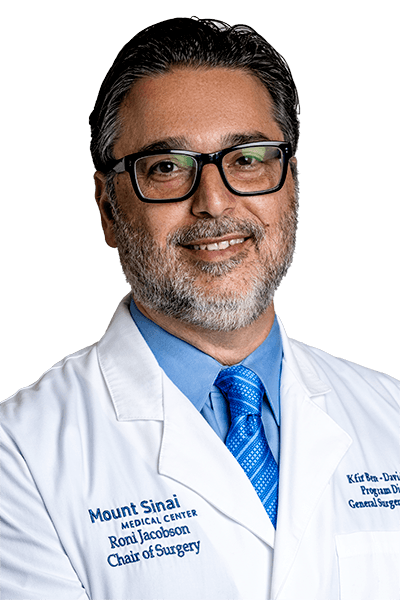
Kfir Ben-David, MD
Roni Jacobson Chairman, Department of Surgery
Program Director, General Surgery Residency
- Cancer
- Surgical Oncology
- Bariatric
- Gastroenterology
- General Surgery
- Robotic Surgery
- Mount Sinai Medical Center (Main Campus)
- 305.674.2397
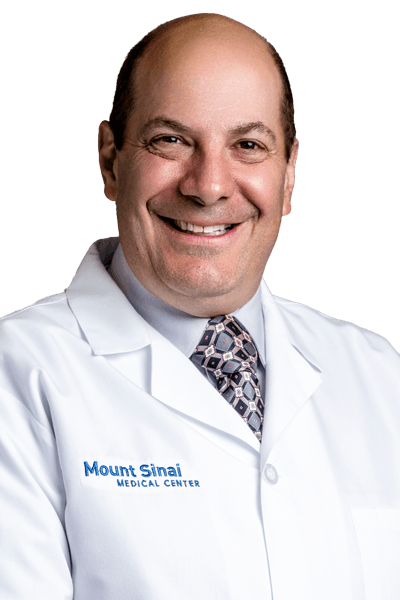
Mike Cusnir, MD
The Pulver Family Chief of Hematology & Oncology, Braman Comprehensive Cancer Center
Co-Director, Gastrointestinal Malignancies
- Cancer
- Hematology/Oncology
- Medical Oncology
- Oncology
- Mount Sinai Medical Center (Main Campus)
- (305) 535-3300
- Mount Sinai Emergency Center, Physician Offices, Cancer Center and Diagnostic Center Aventura
- (305) 692-5400
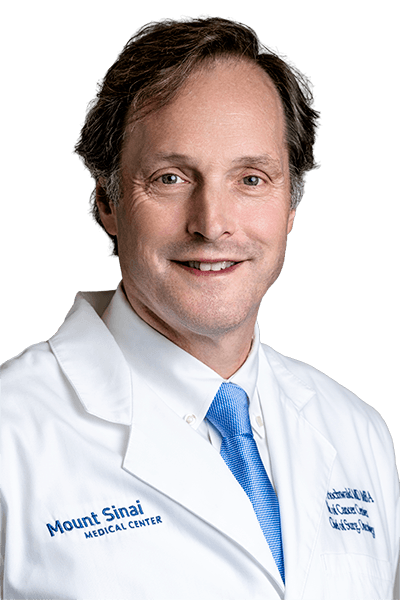
Steven N. Hochwald, MD, MBA, FACS
The Brodie Family Director, Braman Comprehensive Cancer Center
Chief of Surgical Oncology
- Cancer
- Surgical Oncology
- Gastric Cancer
- Liver Cancer
- Pancreatic Cancer
- Mount Sinai Medical Center (Main Campus)
- 305.674.2397
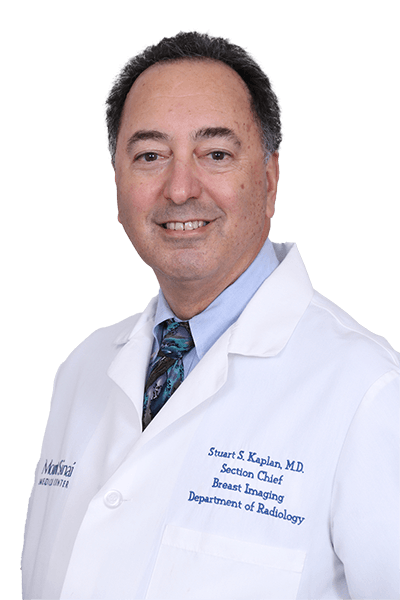
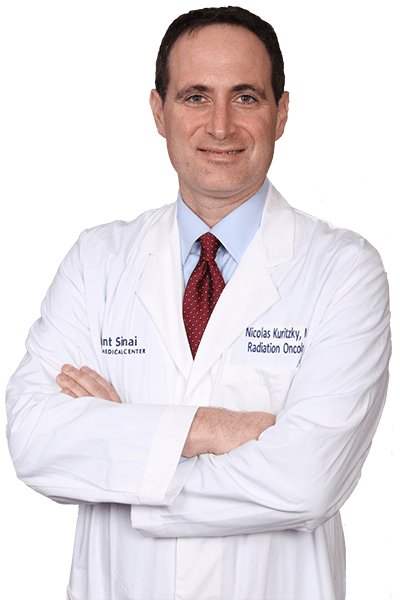
Stuart S. Kaplan, MD
Chief, Section of Breast Imaging, Breast Ultrasound and MRI, and Breast Interventional Procedures
- Breast Imaging
- Cancer
- Oncology
- Radiology
- Mount Sinai Medical Center (Main Campus)
- 305.674.2121
- Mount Sinai Medical Center (Main Campus)
- 305.535.3400
- Mount Sinai Emergency Center, Physician Offices, Cancer Center and Diagnostic Center Aventura
- 305.692.5400

Akshay Bhandari, MD
Shelia & Charles D. Saunders, M.D, F.A.C.S.
Co-Chief, Urology at Mount Sinai Medical Center
Director, Robotic Surgery
- Cancer
- Oncology
- Urologic Oncology
- Urology
- Robotic Surgery
- Mount Sinai Medical Center (Main Campus)
- 305.674.2499
- Mount Sinai Emergency Center, Physician Offices, Cancer Center and Diagnostic Center Aventura
- 305.692.1080
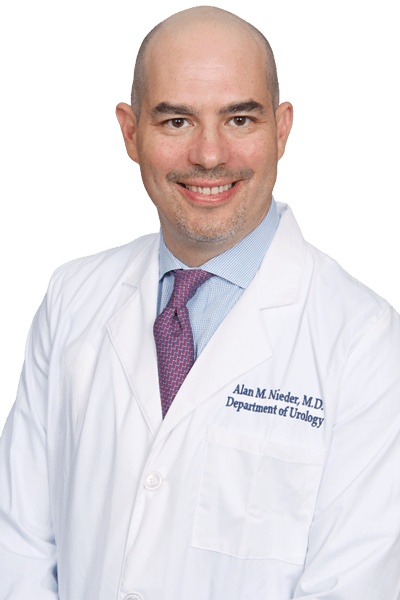
Alan M Nieder, MD
Shelia & Charles D. Saunders, M.D, F.A.C.S.
Co-Chief, Division of Urology at Mount Sinai Medical Center
Program Director, Urology Residency Program
- Urologic Oncology
- Urology
- Cancer
- Oncology
- Robotic Surgery
- Mount Sinai Medical Center (Main Campus)
- 305.674.2499
- Mount Sinai Emergency Center, Physician Offices, Cancer Center and Diagnostic Center Aventura
- 305.692.1080
- Mount Sinai Specialty Care Key West I Cardiology, Urology & Vascular Care
- 305.294.8334
- Mount Sinai Cardiology of the Florida Keys, Marathon
- 305.289.2910

Irman Forghani, MD, FACMG
Director, Rad Center for Precision Medicine
Director of Genetics at Mount Sinai Medical Center
- Cancer
- Medical Genetics
- Mount Sinai Medical Center (Main Campus)
- 305.535.1859